The Picket Fence Mentality Preview

I use this concept to describe the default script society lays out for us—what’s expected of the “average” person living in Western culture.
We go through school; a system we’re told prepares us for life.
Once basic education ends (with debatable results) if we’re lucky, we achieve “the dream”: owning a house with a white picket fence, a tire swing in the yard, and a family. All the while, we trade massive chunks of our lives working to pay for the house and all the stuff we’re told we need to be happy-
For boys that includes a wife that is submissive, relies on them to be the breadwinner/provider and is what is called a “housewife.”
For girls that includes finding a man to settle down with, have his children, and be the “housewife” the man needs to survive the world.

Suburbs symbolize stability and the rise of the middle class. They represent broader access to the material resources that support good health. In an ideal world where we truly expand access to the things that generate wellbeing, everyone would enjoy the quality of life that suburban living often provides.
But we’re nowhere near that reality, especially in the NHL.
The “picket fence theory” (traditional marriage, kids, suburban family life) remains appealing to most men on paper, but fewer achieve it early, and support has softened over generations compared to past decades. Here’s a breakdown from reliable sources like Pew Research, Institute for Family Studies (IFS), and others:

Desire for Marriage

•  IFS 2026 survey of young men (18-29): 68% of unmarried young men say they want to get married someday; 21% unsure; only 10% say no. Among those wanting kids, 90% also want marriage. 

•  Pew Research (adults 18-34, never married): 69% want to marry someday (men and women roughly equal). 

•  High school seniors (2023): 74% of boys say they’ll likely get married someday (down from higher past figures, but boys now outpace girls at 61%). 

•  Broader trends: Harvard Youth Poll (2025) found 57% of 18-29 year olds overall see marriage as important. 

Desire for Children

•  Pew (young adults 18-34 without kids): 57% of men want children someday (vs. 45% of women); 30% unsure, 18% don’t want any. 

•  IFS (young men): 62% of childless young men want to become fathers; among those wanting marriage, 82% want kids. 

•  Other data (e.g., NSFG analyses) shows childless men often report similar or slightly higher interest in kids than women across ages. 

Context and Caveats

•  Most men still link the two: Marriage and kids are often seen as intertwined for fulfillment, with many viewing family life positively. Older data (e.g., 2018) showed ~37-40% of men seeing marriage/kids as “essential” to a fulfilling life. 

•  But reality differs: Marriage age is rising (median ~30 for men), marriage rates are down long-term, and a growing share of men remain childless or single longer. Economic pressures, dating challenges, and shifting priorities play big roles—many want it but face hurdles. 

•  Gender and generational notes: Young men often report higher interest in kids than young women in recent polls. Interest has declined overall since the 1990s, especially among women/girls. 

•  Not universal: 10-20%+ explicitly opt out, and “unsure” is common. Broader cultural shifts (e.g., prioritizing careers, experiences, or long-term relationships over formal marriage) reduce the “must-do” pressure.

In short, a clear majority of men (especially younger ones) still buy into wanting the traditional family package, but it’s not a universal imperative like in past generations, and many delay or never fully realize it. Data can vary by age, income, education, and culture—US-focused surveys dominate here.

strong majority pursue and achieve it during their careers—often marrying and having children relatively young—despite notably high post-career divorce rates. 

NHL players (average age ~27-28 in recent seasons) come from a mix of North American (especially Canadian) and European backgrounds, where traditional family values are common. Many settle down in their mid-20s amid stable high incomes, team support, and cultural norms in hockey communities. 

Marriage and Children Rates (Estimates from Available Data)

•  Players with children: Varies significantly by team and age roster. In a 2021 analysis of most NHL teams (based on public Instagram/family tracking):

•  Top end: Vegas Golden Knights had 9 fathers with 28 children (~3.1 per household); Washington Capitals had 15 fathers with 29 children.

•  Typical range: Many teams had 5–12 players with kids out of ~23 active roster spots (roughly 20-50% with children at that snapshot). Younger teams skew lower; veteran-heavy ones higher. 

•  Anecdotal/ongoing trends: Numerous articles note players marrying and starting families “really young.” Dozens of active players have wives and multiple kids; family announcements (births, weddings) are common in NHL news. 

•  Marriage: High during playing years. Many prominent players (e.g., Connor McDavid, Leon Draisaitl, and others) marry long-term partners, often in their mid-to-late 20s. Public lists of “NHL wives” and wedding roundups show it’s normalized. Exact league percentage is elusive but appears well over 50% for established players. 

Divorce and Stability Caveats

•  High divorce rates: Commonly cited ~70% for NHL/professional athletes overall (or specifically post-retirement within ~1 year for many). This is attributed to lifestyle transitions, financial stresses, infidelity risks, and wives filing in a large share of cases. Alumni data sometimes cites even higher (e.g., 75%). This suggests the “picket fence” is pursued but often doesn’t endure long-term after hockey ends. 

•  Many players prioritize family publicly (e.g., mentioning wives/kids in interviews), and extended hockey families (multi-generational NHL lineages) reinforce traditional models. 

In context of broader trends: This aligns with higher traditional family desires in collectivist or sports subcultures vs. general Western populations. NHL players’ high earnings enable the “picket fence” more than average men, but career demands (travel, injuries, relocations) and post-career adjustments strain it. Younger/rookie players are less likely to be married with kids than veterans. 

Exact “buy-in” percentage (aspirational belief) isn’t polled publicly, but behavioral data points to 60-80%+ engaging with marriage/kids during prime years—higher than general young male averages in some Western surveys, tempered by divorce realities. Data is patchy (mostly public bios, team snapshots, and lawyer/podcast anecdotes) and evolves yearly.

Canadian & American Players (North American majority): Strongest cultural alignment with the traditional picket fence. Canada and the US emphasize marriage and children as key to fulfillment (per general surveys: 60-70%+ of young men desire both). Many come from hockey families with multi-generational NHL ties, reinforcing family-centric values. Public profiles frequently highlight wives, kids, and “hockey dads” — large families are common and celebrated. North American players often marry locally or within similar communities, with less cultural shift required. Behavioral indicators (early marriages, multiple children) suggest the highest “buy-in” and realization rates among NHL subgroups.

•  Swedish & Finnish Players (Nordic Europeans): More modern, egalitarian, and secular views shaped by home-country cultures (high cohabitation rates, lower religiosity, acceptance of diverse family structures, smaller ideal family sizes ~2.0-2.2). Formal marriage is less of a “must” than in North America, with greater focus on work-life balance and gender equality. However, NHL success often leads to stable marriages and children anyway—many Nordic players settle in North America with families and publicly prioritize them. Cultural flexibility may mean slightly later starts or more cohabitation before marriage compared to North Americans, but family remains central once achieved. No evidence of lower overall pursuit; outcomes mirror the league average.

•  Russian Players: Highest emphasis on traditional family structures among European groups, rooted in more collectivist, family-oriented culture (marriage and children seen as essential for social fulfillment and legacy). Russian society places strong value on large or close-knit families, filial duty, and stability. Russian NHLers frequently highlight wives and kids in interviews, often maintaining ties to extended family back home. They may marry younger or have more children on average than Nordic counterparts, aligning closely with North American traditionalism despite geographic/cultural distance. Political and economic factors in Russia can add pressure toward family as a source of continuity.

•  Czech & Other Eastern/Central European Players: Similar to Russians—traditional family values predominate (marriage/kids as core to adult life), blended with post-communist modernization. Extended family emphasis is common.

What is even more common around the NHL is the “type” of woman they all choose. And let me be frank, they are conformed to think the exact same way when it comes to picking a girlfriend/wife. As I stated in the earlier section, patterns resemble…. To be continued this fall.

If you would like to read the first edition, “Meet Me In The Penalty Box,” Click here and you can purchase it today.


Join the Party

I’m building something special for my email subscribers. 

Everything I do in ONE PLACE!! Free tips, workshops, book tour dates, cheerleading info and news before ANYONE else.

I share things here I don’t post anywhere else. Get it straight to your inbox

Announcements and new projects/and product launch coming- click the link above and join the party today!

Blame it on the caffeine

It may not be well known to most, but before Meet Me in the Penalty Box, I have been known for other books and another blog as well. The books that are pictured, “Diary of a Drama Queen,” “Love at First Bite,” and “Relationship Impossible,” Are trending on Tiktok and Instagram. I have republished my recipe book with new recipes and I have a blog that a lot love to read called https://coffeecookiesandonlineshopping.wordpress.com – There I post really delicious recipes and hacks for those who don’t have that much time to bake/cook – Also if you aren’t following me on Facebook, here is the link of my latest video where I am getting ready to make baking/cooking content:

https://fb.watch/H4h2ED3rXf/? – Facebook link


I am writing the sequel of “Diary of a Drama Queen” this summer, called “Drama in the City” – it should be out in 2027
“Meet Me in the Penalty Box” will have a 2nd ed with section 3 added in about a month or so and a bonus chapter


Here is a sample from the recipe blog of a new cookie that I created.


You can follow me on social:

Instagram
Titkok
X

Now, I started to do more marketing for myself as I am always focused on my clients first and foremost. And oh, the Facebook link above you can follow me from too. I LOVE having conversations and seeing fans support- I may just follow you back too!! Let’s build a community!

Meet Me in The Penalty Box Part 2

In “Meet Me in the Penalty Box,” I delve into the pervasive issues of domestic violence and sexual assault within professional hockey, highlighting how the NHL stands alone among major sports leagues without a comprehensive policy to protect victims. The series traces the roots of this toxic culture back to the junior hockey ranks, where young players are molded into conforming to aggressive, hyper-masculine behaviors that prioritize silence and endurance over accountability and empathy.

Meet Me in the Penalty Box: Part 2 promises to be a transformative exploration of hockey’s dark underbelly. with section 3: The Picket Fence Mentality.

It is important to add: The events described reflect the author’s memories, research and perspective. This book is not intended as legal, medical, or psychological advice. Some content depicts abuse and trauma, which some readers may find distressing.

Part 2 release coming soon

How The USA Men’s Team Faked Everyone Out

The US Men’s Team pulled it off on Sunday morning and won gold. Everyone was excited and happy that they did it on the anniversary of the Miracle On Ice 1980. The only difference I will point out was that this team was full of NHL players while the 1980 was not. But that’s not the point of the blog post.

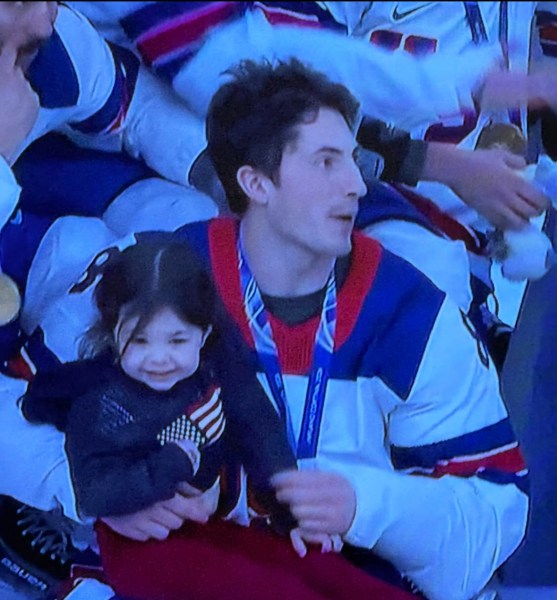
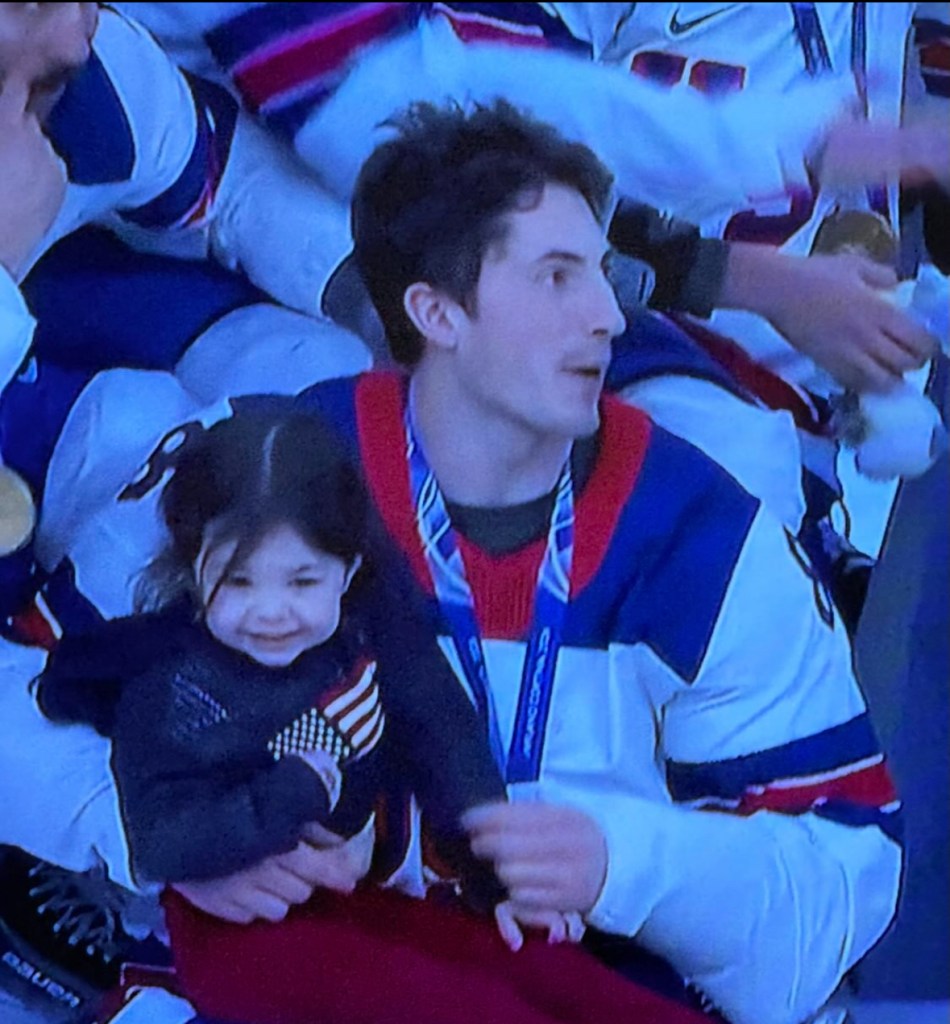
Then Larkin and Tkachuk went into the stands to go get the late Johnny Gaudreau’s kids. I will admit I cried when I saw Johnny’s dad cry, the heartbreak of losing both his sons to a self-entitled drunk will haunt him forever.

But what kills me is the US Men’s hockey team brought out Johnny Gaudreau’s daughter for the photo op but deny the fact that their culture is sexist, misogynistic and toxic towards women. 

These men don’t even fight for the women in their lives now what makes some people think they’re going to fight for her? 

The casual fan has NO IDEA what the culture of the NHL entails, they just see this moment and gush all over it. But women who are actual hockey fans see right through this – we see it as a way to say that these guys are so kind, compassionate and loving. Now, some NHL players might be that, but for the majority they are not.

As I wrote in my new series, “Meet Me In the Penalty Box” part 1: Culture isn’t an excuse for abuse.  And abuse is silent no matter what type of abuse it is: emotionally, mental, physical or sexual. This locker room culture in THE NHL encourages and rewards particular performances of toxic masculinity. And players who don’t adhere to implicit and explicit organizational expectations risk being ostracized.

Al the sexual assault and domestic violence that has occurred has been swept under the rug and the victims are bought off to keep quiet. We can talk about the social media admin of the NY Rangers, the victims of other cases, such as the Chicago Blackhawks, and also the well documented woman from the Hockey Canada case. That’s what the NHL does, they pay off these cases, the settle them. So whenever you hear something about a NHL player fans automatically assume that the woman is lying for a payday and the men take the athlete’s side. They make these guys out to the “Best” when that is not exactly the truth. At least the NFL does not sugar coat their league like the NHL does. They have a policy, the NHL does not. NHL players are PROHIBITED from talking about all the violence against women and even the media that covers the teams don’t MENTION it either. They all have become ENABLERS!

oh, and by the way, Gary Bettman the commissioner “swears” the alcohol is not part of the culture anymore… did you see how drunk out of their minds the team was Sunday? Yes, they won and I don’t care if they had a little to drink. Vincent Trocheck as quoted saying that he was going to “get F-up tonight”

The NHL USA Men’s team has an opportunity now once and for all to CHANGE the CULTURE and stand up for women everywhere and DEMAND a policy to protect the women who work in the NHL, date/marry NHL players and also protect players from sexual assault themselves. If Noa Gaudreau actually MEANS something to these guys and not was just used as a pawn on Sunday to make you believe they care, then they will NO LONGER BE SILENT.

We all have choices in our lives. Let’s see what choice the USA Men’s Hockey team makes- that will speak louder than anything else. Will they keep enabling violence against women or will they stay up as “Proud American Men” and say enough is enough?

The time is now.

For The Love of the Game

What happens when an entire professional sports league is built on toxic masculinity and NOT ONE journalist/beat writer has the guts to talk about it and put pressure on the commissioner Bettman?

What is it like being a woman and working for the NHL?

What toxic behaviors are reinforced in the locker rooms?

How has this toxic behavior been passed down generation to generation?

What are the psychological ways that hockey players are being conformed to not only continue this behavior, but to stay quiet about it?

Get the book today and find out:


You can purchase the book on Barnes and Noble ONLY – The e-book will be available in a few weeks.

We look back, but we also look forward

In 2025 we talked at length about the NHL culture and how corrupt it is. There have been numerous hockey players that have been accused of sexual assault and domestic violence only to have it swept under the rug. Not only does the NHL do this, BUT EVERY OTHER LEAGUE.

We had ECHL teams sign a convicted rapist who was a hockey player.
We had AHL teams sign players who were acquitted on a technicality of sexual assault.
We had former NHL players and coaches accused of sexual assault and domestic violence
We had a freaking NHL team sign a player who was acquitted on a technicality and then put out a statement as to why they signed him AND then PROTECT him from the media
We had the Swiss hockey league sign a player who also was acquitted on a technicality of sexual assault.
We had a KHL team sign a player who also was acquitted on a technicality of sexual assault AND who was brought up in ANOTHER case.

We then had Hockey Canada say that they are making changes to the culture but then NEVER informed the public as to what those changes were – which only means it’s words to calm down the noise only, they still plan to sweep this shit under the rug.

IN 2026, we will make sure that each league gets what they deserve. I will forever be the “problem” breaking rules I did not make in order to change this culture and make hockey stop being a “boys club” and not only repent, but create a policy that protects women AND hockey players ( in case you forgot there were hockey players that were sexually assaulted and molested back in 2010, which came to light in 2021)

My series, “Meet Me In The Penalty Box” will be the talk about 2026 – The books will be coming out starting in January 2026 plus an ebook.
You can also follow me on IG ( see above) X, formally Twitter, Tiktok and Youtube for the video series and photos.

As we lose one chapter, we’re about to open another.
And this new chapter is filled with truth.
Get ready.

6/7

We have all heard kids say this and Dictionary.com has named it word of the year. So, to make this shirt worthwhile, with your purchase 30% of the profits will go to the non-profit Kids Feeding Kids. So not only will your child love wearing the exclusive T-shirt but helping other kids in the process.

LINK To purchase: Click Here

Also, on my shop I have fun Christmas and holiday stuff too! It’s never too early to shop!

COMING SOON: My Book, Part 1: Meet Me In The Penalty Box
Hint: It’s 2 parts. The paperback might be available before the ebook

2025: Unrealistic Body Image Finally Enters The Chat

We live in a culture that praises weight loss. The message we’re sending is that you only look good because you lost weight.
Fat phobia- because of our intent, we perpetuate diet culture, and fat phobia when we compliment someone on their smaller body. Our society praises weight loss as if it’s the best thing a person could ever do. Not only that, but we comment on people’s bodies without having any idea what is going on in their lives.

Last week Jennifer Love Hewitt made more women in their 40s so happy that someone in Hollywood actually looks like them. She didn’t run off to use ozempic and she didn’t go ahead and do a crazy-ass diet. She is what women are SUPPOSED to look like and she was so proud of her body!

We “assume” that their weight loss is “positive”, when it could be due to a chronic illness or an eating disorder. All unsolicited comments about someone’s body are bad and shouldn’t be praised because no one asked for them. Even if someone asks, we shouldn’t even give them one when actually we should take it a step further and tell people that they don’t want to receive those comments.

We should be telling people to focus on who that person is not by what that person looks like. If only people did this on social media.

Social media is the perfect environment, unfortunately, where the diet culture flourishes. It thrives on comments from men who think they know that certain bodies are “better and hotter” than others. Yes, guys who are losing their hair, have beer bellies, droopy chests and butts, are telling women that they all need to look like a goddamn Barbie doll, when they themselves are so far away from representing Ken.

Women who already have suffered from a body image disorder, get triggered by those comments and now are drawn back into the diet culture. And for what? To please all the men who you don’t know on social media, who basically have their own insecurities about their own looks and projected on women?

The sad reality is, if you look on social media and even dating apps, all men want this fantasy woman who is 5 feet tall 5 inches, 130 pounds, size 2, blonde hair, and blue eyes, who accepts bare minimum, and who could pass for either a Victoria’s Secret model or a Barbie doll. What they don’t realize is that a woman’s looks is never going to raise their children. Her mindset will.

Men never focus on who a woman really is, speaking in terms of her personality, mentality, and character. But they only focus on how hot she looks so his teammates, and friends can be extremely jealous of his arm candy.

Oh, once you hit 35 and you’re a woman you’re old and decrepit according to social media.

If only men could stop being, “so full of themselves,” and stop trying to “fit in” focusing on loving a woman for who they truly are. But instead, they don’t want to embrace that main character energy. They wanna focus on what isn’t instead of what is.

I guess the question really is this : do we really want to spend our lives agonizing over trying to make others happy instead of making each day we live the best days we’ve ever had? When are we going to realize that nobody at your funeral is going to say the following: “ I remember so-and-so, she was a size 4 all her life, she was always so skinny, she was always looking hot and beautiful, etc”

They are going to remember how you made others feel, how you lived life and the kindness you showed others . That’s a life worth remembering.